Your Walk-In Cooler Is Drifting Warm. Here's What to Check First
A cooler that's a little warm today is telling you something. Catch it before it's a lost inventory night.
August 25, 2026 · 4 min read
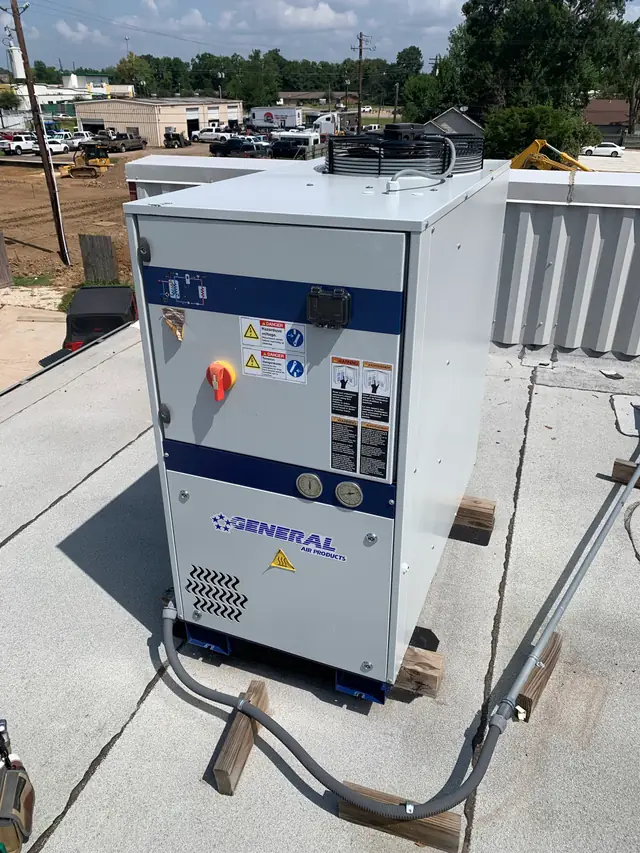
Nobody notices a walk-in cooler until it's wrong. One day the thermometer on the door reads 38 instead of 34, and the instinct is to shrug it off and check again tomorrow. That instinct is usually the expensive one. A cooler drifting warm is almost never a coincidence, and by the time it's warm enough to worry about, the compressor has usually been working harder than it should for weeks.
Start at the door, not the compressor
The gasket around a walk-in door takes more abuse than any other part of the box. Forklifts clip it, cases of product prop the door open longer than they should, and cardboard dust works into the seal over months. Run a hand along the full perimeter while the door is shut. A spot where you feel air movement, or where a dollar bill slides out too easily when you shut it in the gasket, is a leak. Warm, humid Gulf Coast air pouring in through a bad seal forces the compressor to fight a losing battle around the clock, and it shows up first as a slow temperature drift, not a sudden failure.
Strip curtains matter here too, especially on a unit with high foot traffic. If the curtain is torn, missing strips, or just hanging open because someone tied it back for convenience, that's an open door the compressor doesn't know about.
Then look at the evaporator coil
Inside the box, the evaporator coil is the part actually pulling heat out of the air. If it's caked in ice or coated in dust and grease from the kitchen, it can't move air the way it's supposed to. A thick layer of frost usually points to a defrost cycle that isn't running on schedule, or a door that's been left cracked long enough to load the coil with humidity it can't shed between cycles. A dirty coil is a slower problem, built up over months of normal kitchen air passing through it, and it quietly reduces how much cooling the system can actually deliver even though the compressor is running exactly as much as it always has.
- Frost building up unevenly across the coil face, not just a thin uniform layer
- Fan blades caked with dust, which cuts airflow even on a clean coil
- Standing water in the drain pan, a sign the condensate drain is backing up
- A compressor that runs almost continuously instead of cycling off
The refrigerant question nobody can answer by eye
Here's where a homeowner's or manager's own troubleshooting has to stop. A cooler that's short on refrigerant, or one running with a partially clogged metering device, shows almost the same symptoms as a dirty coil or a bad gasket, a slow warm drift that gets worse under load. There's no visual check for refrigerant charge. It takes gauges, and reading them wrong can mask the real problem or make it worse. If the door seals check out, the coil is reasonably clean, and the drift is still there, that's the point to call it in rather than keep guessing.
Why this matters more in August
A commercial box that's marginal in April becomes a real problem in August. The condenser sits outside fighting Gulf Coast heat and humidity at the same time the kitchen or stockroom around it is running its hardest. A system that was quietly losing ground all spring runs out of margin exactly when losing the box costs the most. Prime Texas Air handles commercial refrigeration service across The Woodlands, Spring, Conroe and the rest of the north Houston area, walk-ins and reach-ins both, and the calls that turn into a full loss are almost always the ones where the slow drift got noticed and then ignored for another week.
None of this is complicated to check. It's five minutes with your hand on the gasket and a look at the coil. The point isn't to fix a refrigeration system yourself, it's to know which five-minute check turns a warm cooler into a scheduled service call instead of a middle-of-the-night one.
Building a habit out of it
The operators who almost never lose a box are usually the ones who log the temperature twice a day and actually look at the number, not just glance and move on. A slow drift is easy to miss day to day, a degree here, a degree there, but it's obvious on a week of logged readings. That log is also the single most useful thing to hand a technician when something does go wrong. A tech who shows up to a box that's already 45 degrees with no history has to start from zero. A tech who shows up with two weeks of readings showing a slow, steady climb can usually narrow the cause down before they've even opened the panel.
Same goes for the condenser outside the building, if the box has one mounted outdoors rather than a remote system. A coil packed with cottonwood fluff, kitchen grease pulled from a nearby exhaust vent, or just months of dust cuts the unit's ability to reject heat, and it shows up as the exact same slow warm drift as everything above. Keeping that coil visibly clean is one of the few maintenance jobs that genuinely pays for itself, because a condenser fighting restricted airflow runs longer, pulls harder, and wears out its own compressor faster than one that can breathe.
None of this replaces a scheduled maintenance visit. It just means the box is far less likely to need an emergency one.
Prime Texas Air, (832) 586-6884
Call (832) 586-6884More articles
What Actually Breaks on a Texas AC in August, and What It Costs to Find Out
The heat doesn't break your AC directly. It just finds whatever part was already weak.
What Actually Happens When a Nest Install Trips a Fuse
One wrong wire on a smart thermostat swap and the whole system goes dark. Here's why.